
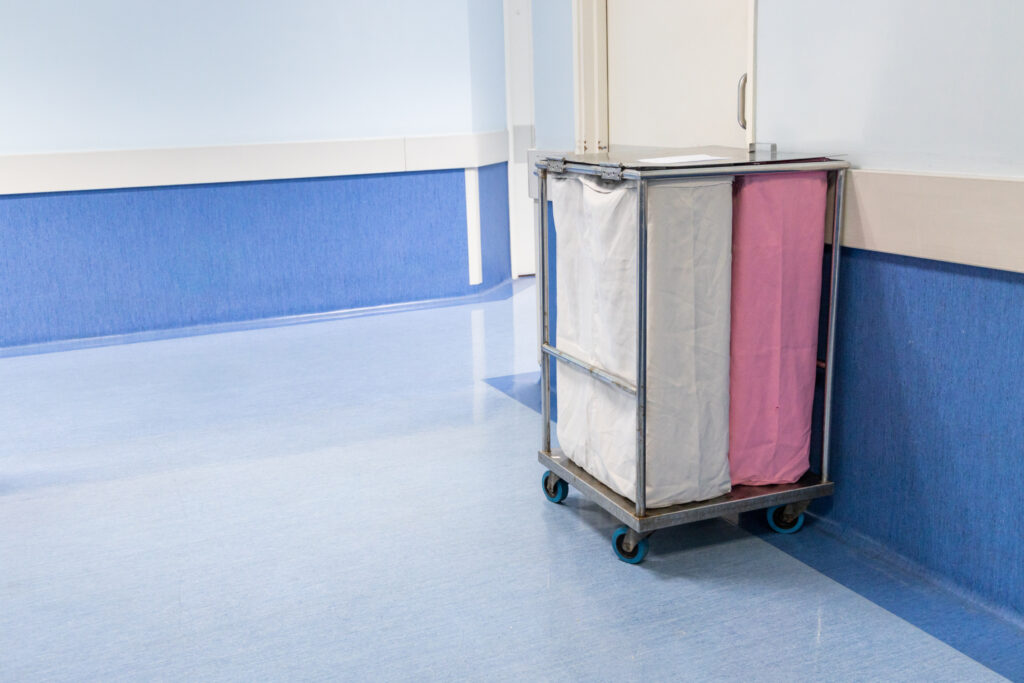
There’s a maintenance cycle most facility managers know well. A cart clips the corner of a hallway. A door swings wide and catches the drywall. A gurney makes a tight turn and leaves its mark. Nobody files a report. Nobody orders a repair right away. The damage sits there, gets a little worse, and eventually someone adds it to a list that keeps growing faster than it gets addressed.
This is what wall protection is actually solving. Not aesthetics. The daily, compounding cost of ignoring what high-traffic interiors do to unprotected walls.
What the Problem Looks Like in Practice
Picture a mid-size school. Hundreds of students moving through corridors multiple times a day. Custodial carts, AV equipment on wheels, lockers opening into hallways. The walls along the main corridor take a beating every single day, and the maintenance team is patching and repainting sections of that hallway on a rotating basis.
It isn’t a dramatic failure. It’s a slow, steady drain on the maintenance budget and the staff’s time.
The same pattern shows up in medical facilities, where gurneys and equipment carts are in motion constantly. And in commercial office buildings, where a busy loading dock or service corridor can chew through drywall faster than anyone budgets for.
If any of that sounds familiar, you already know the problem. The question is whether the next project scope addresses it before it starts.
What Division 10 Wall Protection Actually Covers
Wall protection isn’t a single product. It’s a category that includes several components, each addressing a specific type of impact or contact zone.
Corner guards protect the most vulnerable points in any corridor: the exposed edges where two walls meet. Without them, corners take repeated hits from carts, equipment, and foot traffic until the damage becomes structural, not just cosmetic.
Crash rails run horizontally along the wall at the height where carts and equipment make contact most often. They absorb impact and redirect it, keeping it off the drywall behind them.
Wall panels and surface protection cover larger sections where impact is frequent or where hygiene standards require a cleanable, durable surface. These show up most often in healthcare corridors, commercial kitchens, and school service areas.
For any facility that sees consistent daily traffic, these aren’t optional upgrades. Corridors take damage over time whether you plan for it or not. Corner guards and crash rails are how you decide in advance what absorbs that damage: the product designed for it, or the wall behind it.
What Changes After Installation
When corner guards go in at every corridor intersection and crash rail runs along the primary traffic corridors, the maintenance picture changes in a specific way: the patching and repainting cycle stops. Not because the facility gets less traffic. Because the surfaces absorbing impact are now designed to absorb it.
Holman, Inc. installs wall protection that is selected for these environments. Impact-resistant materials rated for actual traffic volume. Finishes that don’t require touch-up painting because the color runs through the material. That distinction matters over a ten-year lifespan in ways that are easy to underestimate at the front end of a project.
Stop Budgeting for Repairs You Could Have Prevented
The cost of wall protection installation is straightforward to estimate. The cost of skipping it is harder to track, but it shows up in maintenance labor hours, paint and patching materials, and the compounding problem of deferred repairs.
If you’re managing a facility with high-traffic corridors and you’re spending time and budget repairing walls, that’s the conversation to have before the next project scope is finalized. Holman, Inc. has been handling Division 10 installations in Jacksonville and the surrounding area for over 20 years. We know which products hold up and which ones look good in a catalog and fail in the field.
Reach out to our team and we’ll help you figure out exactly what your corridors need.
